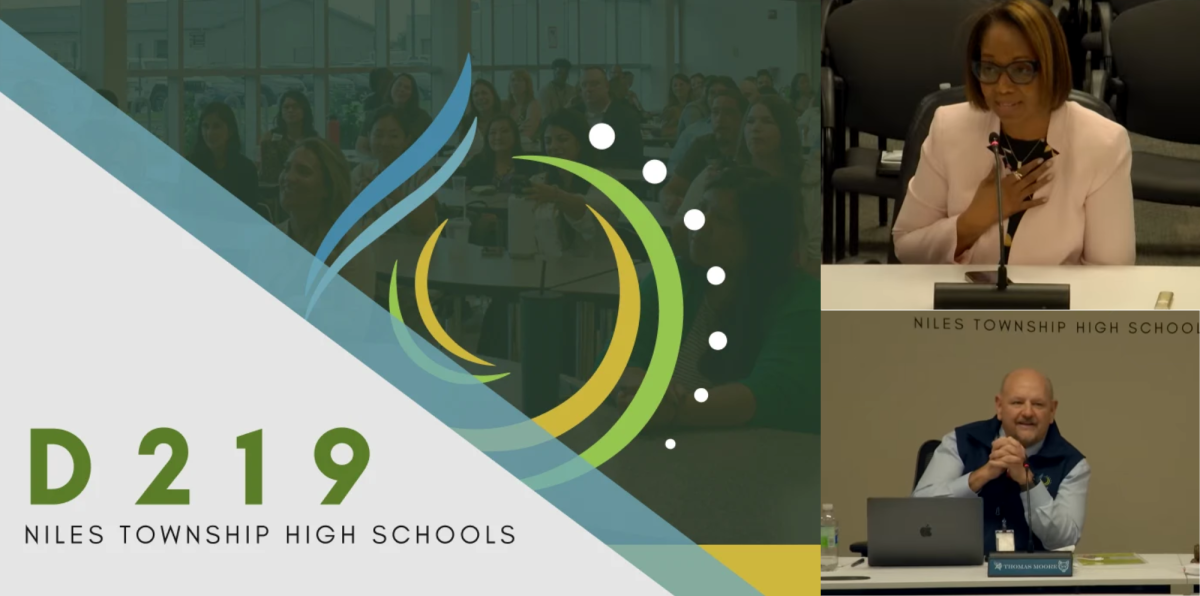

Opportunity and clarification were two main themes heard from students on Jan. 14 at the monthly D219 board meeting. 13 took to the podium, prepared to speak before the board about various issues that students from both Niles North and Niles West have noticed at their schools.
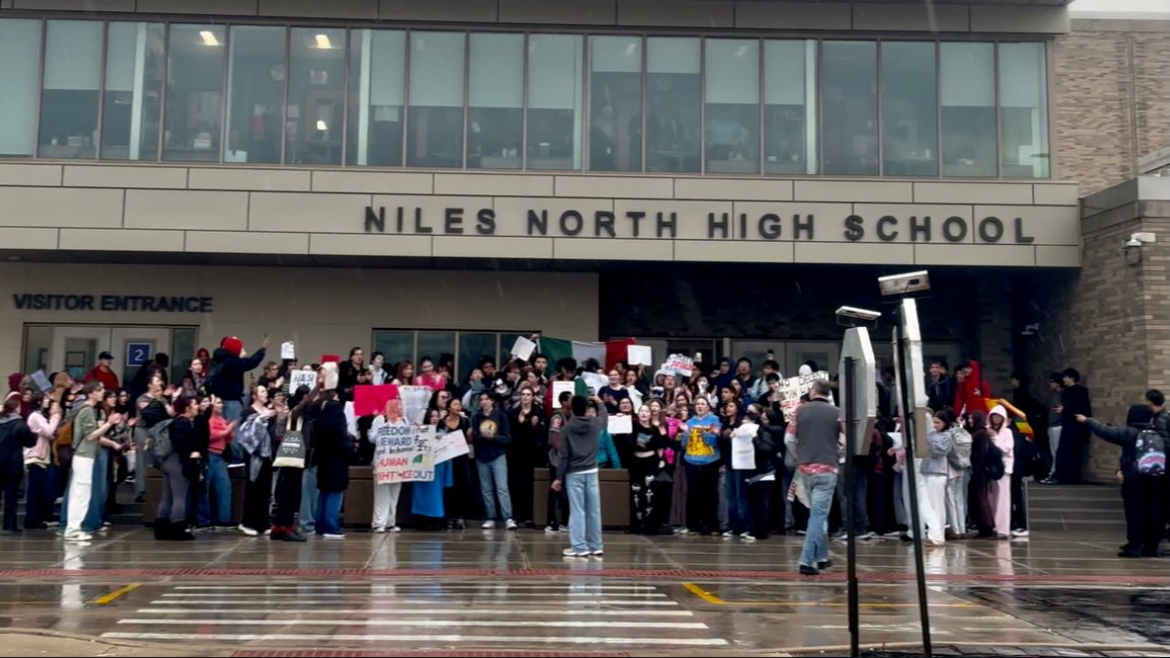
Public comments began with a speech from a student at Niles West. This student highlighted what he believed was discriminatory censorship made towards Muslims advocating for anti-genocide. He called to attention specific quotes made by Superintendent Thomas Moore from past meetings, claiming Moore has openly expressed disdain for hate speech, however the West student claimed not enough action has been taken in response to hate. Instead, he said, Muslim students have been censored in various ways with no explanation as to why.
The student expressed his confusion, urging the school to stand by the values that the school has supported. “Why should the values that the school claims to have, amazing, great values, not apply to Muslim students?” At the end of his speech, this student made three demands. Consistent and nondiscriminatory policies on free speech, education on Islamophobia, and consulting with Arab and Muslim students and staff.
The next 12 commenters, a mix of both North and West students, brought up the issue of funding for competitive clubs and activities. Students brought attention to the fact that although many activities offered by both schools provide endless opportunities for students, often, cost becomes a barrier preventing students from reaching their full potential.
As explained by the students, these barriers have left students and families in two main situations. The first situation is having to potentially miss out on competitive clubs, educational trips, or competitions that occur after joining an activity.
Amber Weatherspoon, co-president of Science Olympiad, explains how she was shocked to see that although Science Olympiad is the most popular it has ever been and was very successful last year, making it to state, the budget was virtually nonexistent.
“Unfortunately, we had to spend an enormous amount of time fundraising, and even considered making every single student pay a membership fee,” Weatherspoon said. “The truth is, I know people personally who would have to leave the club, or even be scared to join a club with a fee, because they just can’t afford it. Even with a fee, however, many still can’t afford their competitions.”
If students can pay the fees to make it to competitions, they are then required to pay for food the entire time, sometimes totaling over one hundred dollars per competition. Student David González-Rodríguez explains how, even though there are some programs implemented like free and reduced lunch, to help take off some costs, the numbers on paper often don’t match a family’s true ability to afford something.
“Many families that are deemed financially capable on paper live in circumstances that make daily necessities uncertain,” González-Rodríguez said. “Even today, I speak with a headache because I’ve had to skip lunch consistently since my junior year. A reality shared by more students than data alone would suggest. Additionally, as college admissions shift away from raw statistics, focusing more on involvement and passions, funding cuts restrict not only who can participate, but who can compete, succeed, and accept future opportunities.”
The students urged the board to stick by their value of equity and help students overcome cost barriers. Ashley Weatherspoon described specifically what students are asking for: “A clear district-wide policy that funds student meals on competitive club trips, and a baseline budget for competitive clubs”.
She explains that, “Over the past years, a policy has been implemented that students’ meals are not funded on trips. Exceptions have been suggested on a case-by-case basis. That approach places the burden on low-income students to identify themselves, to advocate for themselves, and to hope that they will be approved. That is not equity, that is uncertainty that creates barriers.”
She explains how unclear budgets leave students guessing if they will be able to afford competitive clubs, which often leads to opting out.
According to the students, another situation that they advocated for is that even if they are entered in the club, a lack of funding makes it increasingly difficult to be competitive against other schools that have more resources.
Victor John, a member of the Esports team, stood before the board to explain how, even though the Esports team is consistently ranked top in the state or nation, their success is limited due to inconsistent practice conditions.
He goes on to explain how a lack of designated practice space, along with standardized equipment, means that members of the team have to use their own resources from home to prepare for competitions. Saying this is a stark contrast to their competitors, who have updated computer labs, wifi, equipment, and do not face the issue of outdated technology that can’t keep up.
Although the team has proven to show skill and commitment, differences in budgets can impact whether or not students can succeed at their full potential. “What we are asking for is not a brand new building or an exclusive space; we are asking that an existing classroom be intentionally repurposed into a designated gaming lab…this place would allow us to practice and compete on equal footing, while also being a flexible classroom for other purposes such as a multimedia room,” John said.
After listening to student comments, Moore responded, saying there were no cuts made and only a few processes that have been changed. There was no further explanation on these processes at the meeting; he stated that someone would be sent to explain the changes to students. Another member of the board ended the statement by saying, “We do hope that next time they [students] don’t wait till a board meeting. Anyone can email [email protected] and let us know what’s going on,” explaining that all board members are available to clear up any confusion that students or community members may have.