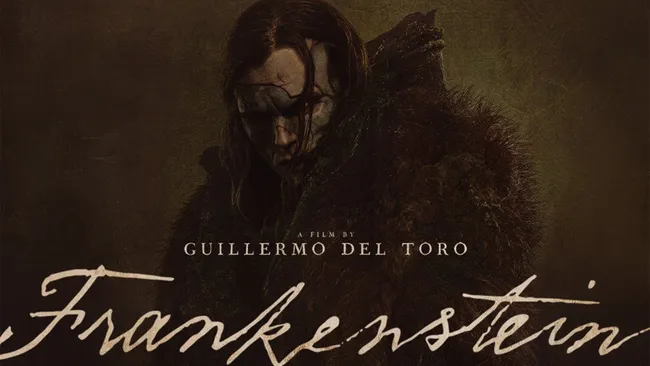
By now, we’re all familiar with one of the most infamous science fiction monsters of all time: Frankenstein. Originally written in 1818 by Mary Shelley, Frankenstein has since appeared in hundreds of adaptations across all sorts of media. Guillermo del Toro’s latest movie adaptation serves fresh takes on this classic horror story.
Reading Mary Shelley’s original novel and constantly seeing a typical portrayal of Frankenstein as this terrifying monster, I never realized until watching this film that Dr. Victor was, in fact, the true villain of the story.
Upon creation, Frankenstein is like a newborn creature, having to learn to do everything, including walking, talking, and learning what the world around him is like. Victor, Frankenstein’s creator, immediately becomes frustrated and impatient with the “incompetence” of his creation. His impatience turns into anger, leading him to reject the being he brought into this world. Part of Victor’s response has to do with his own upbringing, which is shown at the beginning of the film: his abusive father raised him in a sheltered environment that taught him he must always be the best and that failure is never acceptable.
Frankenstein symbolizes innocence, as he is vulnerable to the world around him. Victor isolates him from the world by keeping him chained up. He attempts to teach Frankenstein to be intellectual and independent; however, he fails because all Frankenstein truly wants is companionship and to be shown love. Instead of thoughtfully caring for this confused newborn creature, Victor mistreats and abuses him, influencing Frankenstein to become inherently evil since that is all he has known up to this point.
In terms of plot, the movie excels. We see the points of view of both Victor and Frankenstein. With this dual structure, the story feels more balanced and less biased. Instead of relying on Victor’s fear of Frankenstein’s anger and power, the film shows the emotions, faults, and motivations of both characters. This shows how both characters contribute to the rising tension, making the storyline feel deeper.
“I really liked how it started as a movie you thought you were gonna be scared of throughout the movie, it became more of an emotional movie,” ETHS senior Jaxson Malow-Williams said. “I also really liked the character development and how each little story made you second-guess what you thought was really happening.”
In addition, the ending of the film has a clear resolution. This is unusual, considering that in Shelley’s original novel, the ending is more bleak and ambiguous. Though typical adaptations follow that same pattern of unresolved conflict, this film doesn’t. This film concludes with a more concrete and a more purposeful conclusion that ties character arcs together, ultimately creating a more hopeful ending as the characters reconcile and forgive each other. It’s an interesting twist on the usual Frankenstein story, as both characters learn from each other’s actions and develop character growth as the story progresses.
Overall, this film left me reflecting on themes of innocence vs. evil, friendship, and reconciliation. Watching this film allowed me to understand the deeper meaning of this original storyline and understand the duality of both characters’ complex experiences and perspectives.