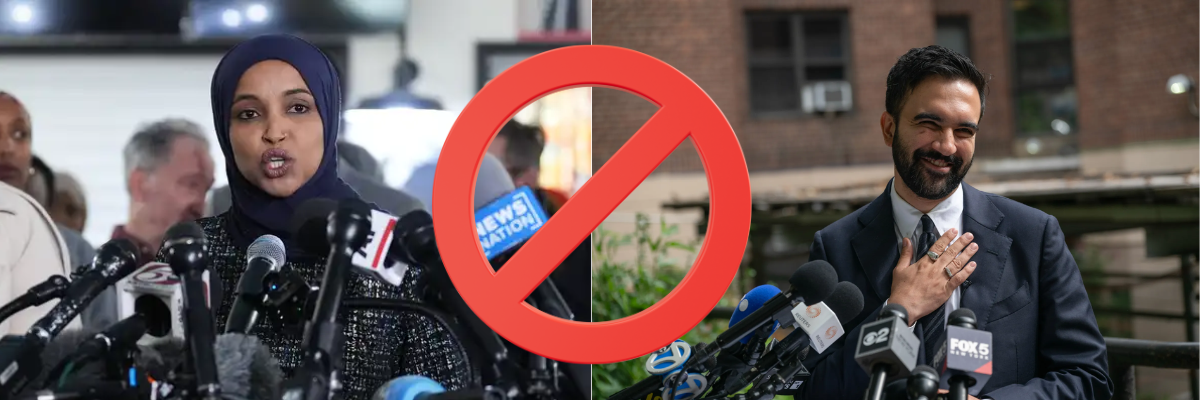
On Tuesday, January 27, Congresswoman Ilhan Omar, one of the most prominent Muslim politicians in the United States, was sprayed with a mix of water and apple cider vinegar in a shocking public attack. For some it may have seemed like a fleeting news story, but for Muslim Americans, including myself, it was a sudden reminder that Islamophobia is very real and that it still thrives in ways both visible and subtle.
Discrimination against Muslims isn’t always seen with the bare eye. It can be seen as microaggressions, online harassment, stereotyping in media, or exclusion from opportunities. But sometimes it turns physical, like what happened to Omar.
Omar isn’t the only public figure facing Islamophobia. Zohran Mamdani, who recently became the mayor of New York City, has also faced Islamophobic attacks and prejudice throughout his career. Mamdani, the city’s first Muslim and South Asian American mayor, has spoken openly about the challenges of being targeted because of his faith, such as being called slurs openly through social media.
These incidents are more than isolated moments. When elected officials, individuals in leadership roles, are targeted for who they are, it reflects deeper issues in society. It suggests that bias against not just Muslims but any individual is not just hatred but part of a broader pattern of injustice that affects real people across the country.
For context, Islamophobia is the fear or hatred directed at Islam and people perceived to be Muslim; it can show up in many ways, from individual harassment to discrimination in schools, workplaces, and public institutions. Some forms of Islamophobia include microaggressions, bias in media, political rhetoric, and policy decisions. These forms of bias create an environment where individuals feel unsafe simply because of who they are or what they believe in.
To understand Islamophobia today, it helps to look at the past. Anti-Muslim bias in the U.S. didn’t start recently, but it intensified after the terrorist attacks of September 11, 2001, otherwise known as 9/11. In the weeks and months after the tragedy of 9/11, mosques were vandalized or burned, Muslim Americans reported harassment in public spaces, and students said they were bullied or called slurs in schools.
In the following years, public policies and political debates often focused on national security, immigration, and terrorism. While public safety is important, these debates sometimes frame Muslims as a threat rather than as part of the diverse American population.
Language matters a lot as well. When politicians such as President Donald Trump or any other media personalities describe Muslims as dangerous or call them offensive names, it influences how people think and act. Research shows that negative media portrayal can increase prejudice toward entire groups. Even if someone has never met a Muslim or an individual from any religious background, repeated negative messages in news, ads, or social media can shape beliefs.
Ignoring Islamophobia only makes it worse. When people dismiss attacks as “rare,” it allows prejudice to grow quietly. Speaking out isn’t always about politics; it’s about justice, dignity, and safety. Everyone deserves to feel protected in their communities, schools, and workplaces.
Recognizing bias is the first step toward change. It is a call to action for everyone to speak out against hate, challenge stereotypes, and create communities where everyone feels safe and valued. Standing up against all forms of discrimination, from racism to xenophobia to religious intolerance. True progress comes when fairness and justice are applied to all, not some.