
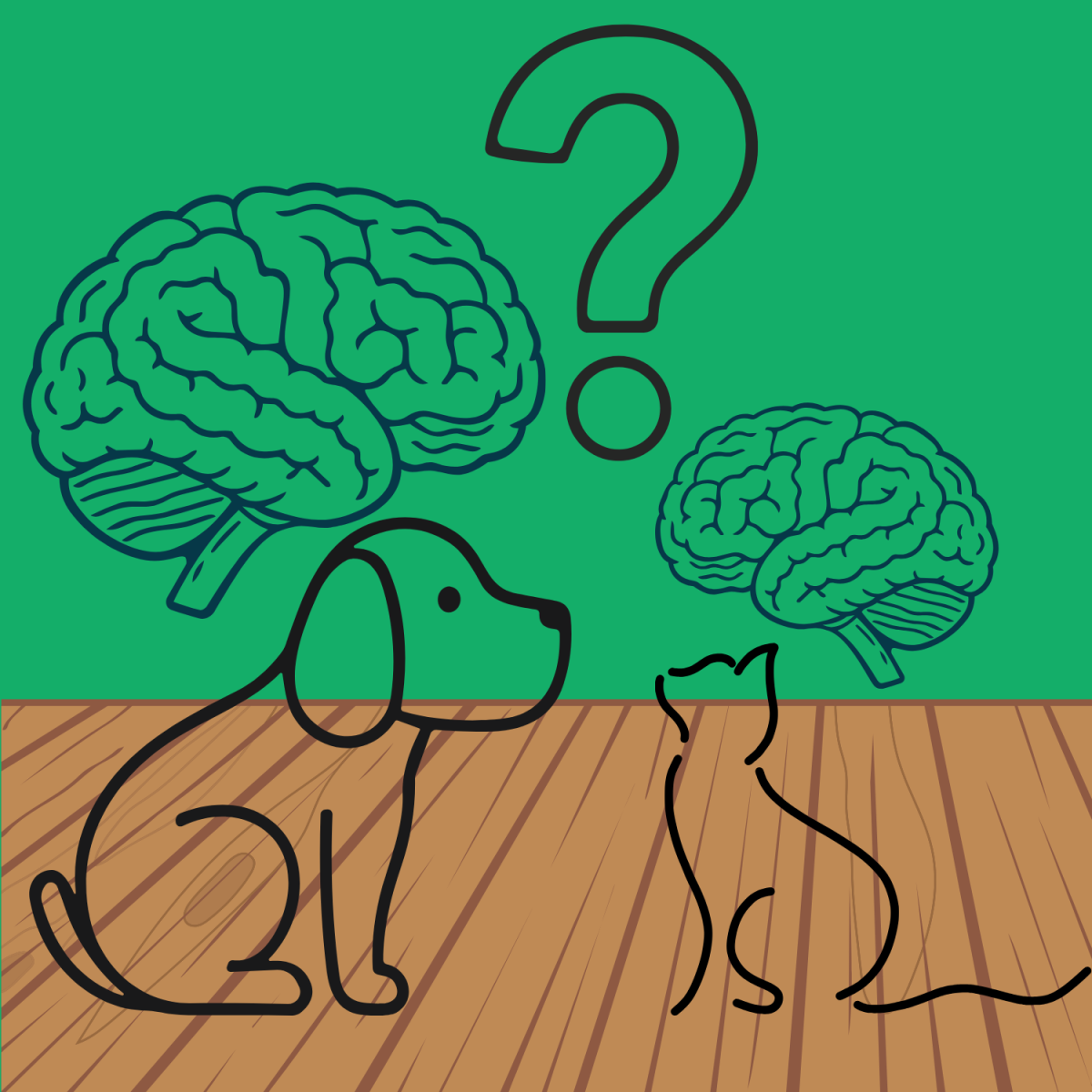
The debate over whether dogs or cats are smarter has been around for years, and most people choose a side based on personal preference. Dog lovers argue that dogs are more intelligent because they can be trained and understand people, while cat lovers point to cats’ independence and natural instincts. While both sides make strong arguments, there is some scientific evidence that gives dogs an advantage.
One of the main reasons dogs are often seen as smarter is because of their brain structure. Studies have shown that dogs have more neurons in the part of the brain responsible for thinking and problem-solving than cats do. Since neurons are what help process information, having more of them suggests that dogs may be capable of more complex thinking. This supports the idea that dogs have a higher overall cognitive ability.
This difference can also be seen in behavior. Dogs are highly trainable and can learn a wide range of commands, from simple tricks to complex tasks. They are often used in important roles such as guide dogs, therapy animals, and search and rescue teams. These jobs require focus, memory, and the ability to respond to human cues. Dogs are also known for their strong social intelligence. They can read human emotions and react in ways that show understanding and awareness.
Cats, on the other hand, show intelligence in a different way. They are more independent and rely heavily on instinct. Cats are skilled hunters, able to observe, plan, and react quickly to catch prey. They are also capable of solving problems on their own, even if they are less interested in working with humans. Their intelligence is less obvious because it is not always directed toward people.
This is why the question is not completely simple. Intelligence can mean different things. Dogs may be better at communication and teamwork, while cats may be better at surviving on their own. However, when looking at overall ability to learn, adapt, and interact with humans, dogs seem to have the edge.
Both animals are clearly intelligent in their own ways, but the evidence and behavior patterns suggest that dogs come out slightly ahead in the debate.