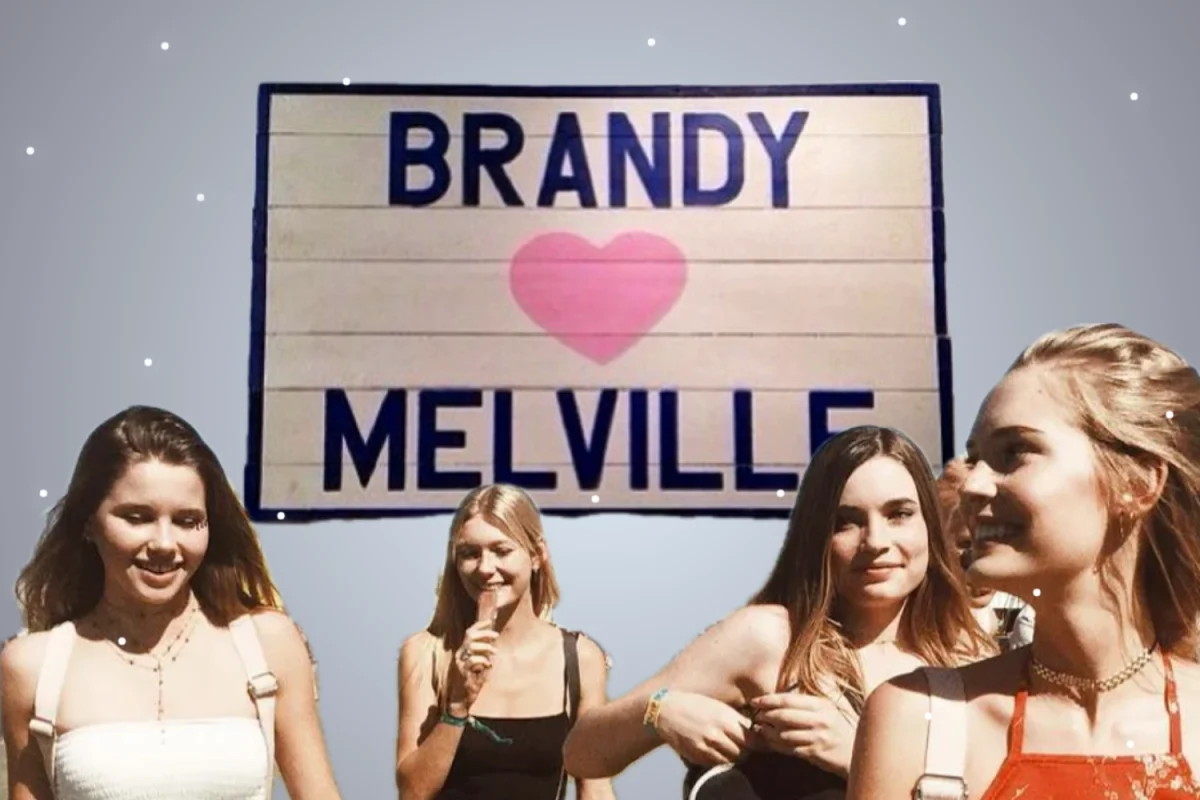
We’ve all heard the criticism and accusations against Brandy Melville, but who is she? The truth is “Brandy Melville” isn’t a real person. The store’s name is based off of an old folktale about an American girl named Brandy and an Englishman named Melville who fall in love and run away together.
The cute name and baby pink logo is just another one of their marketing tactics. Do you really know the real Brandy Melville, the girl who’s hiding behind the fairytale? Turns out, she isn’t a girl at all.
Brandy Melville was founded by Italian businessman Stephan Marsan, and has remained under his management for roughly 50 years.
Marsan might have hundreds of millions of dollars to his name, but let’s just say… that name doesn’t exactly have the cleanest track record.
The Brandy Melville documentary explored the numerous controversies that Marsan and his company have faced. Aside from the accusations against Brandy Melville as a whole, the CEO himself has his own personal scandals to deal with.
One of the main accusations surrounded the vetting process when choosing Brandy Melville’s store employees. Former store managers reported that they were instructed to hire their workers based exclusively on their appearance. Similar to their models, their ideal employee’s appearance was: thin, white, pretty, young girls.
Girls who met these physical standards were often recruited on the spot while they were shopping at Brandy Melville.
An ex-employee featured in the documentary recounted that Marsan had installed a red flare device at the cash register of a Manhattan store location that was connected to his in-store mezzanine. This device could be activated when the CEO spotted underage girls who fit the “Brandy aesthetic” and would notify the cashiers to photograph and recruit the girls.
Not only did the girls have to meet these requirements to be hired, they had to maintain their “desirable” features in order to stay employed. In some cases, girls were asked to starve themselves so that they remained small enough to fit into Brandy’s “one size” policy. If the girls started to stray away from the “Brandy aesthetic” by appearing too heavy or dressing alternatively, they would be fired on the spot.
Marsan also had an unabashed bias against hiring people of color, specifically black people. The very few black workers he employed were given jobs in stock rooms or other areas of the store where they wouldn’t be seen by customers, all because he believed that they didn’t fit the “Brandy aesthetic.” While black teenagers were discriminated against because of their race, blonde and red haired girls were given raises due to their “desirable” look, regardless of their skills as employees.
“Fashion has been built on these very racist, colonial structures,” said the CEO of Remake Advocacy Group, Ayesha Barenblat, “and on the backs of mostly women of colour, and the way the industry gets away with abusive situations is by dehumanising this workforce. These women are hidden from our consciousness.”
Not only did Marsan have racial biases within his workplace, he seemed to be a blatant racist in every regard. In 2020, Brandy Melville was sued for 1.5 Million dollars after Marsan shut down a store location that he believed to be “too ghetto” to fit the “Brandy aesthetic” because it was located in a predominantly African-American community and thus “catered to black people.”
Brandy also hires mostly teenagers as models and store workers, which raises suspicion about Marsan’s preference towards underage girls. Especially because the models on the website are photographed in revealing clothes, sometimes only underwear, without their faces being shown. This can easily be interpreted in a sexual nature or as a way of reducing young girls to just their bodies.
Managers were instructed to send Marsan photographs of potential female recruits that entered the store as well as female employees so that Marsan could judge whether or not they still fit the “Brandy aesthetic.” Marsan allegedly began requesting full-body images of the girls, which purposely emphasized their chests or feet. If they were not to his liking, they would be fired. If they were, they’d be promoted.
Why is it that nearly all Brandy Melville employees are young girls while the company is fully male-owned? Why is it that the majority of retail workers in Brandy, Victoria’s Secret, Zara, and most other popular clothing stores are female when only 12.5% of fashion companies are owned by women?
Let’s circle back to the town of Kantamanto, Ghana, where an obscene amount of Brandy’s clothing waste is dumped. The local head porters, called Kayayei, are responsible for transporting waste around these massive landfills. The exports they carry weigh a minimum of 120 pounds, causing most Kayayei to suffer chronic spine damage, even resulting in scoliosis.
All of this is disguised under a deceptive “made in Italy” tag on Brandy’s clothes. This label only refers to where the company was established and where clothes are manufactured while hiding the labor crisis on the other side of the world.
However, the manufacturing hubs in Italy–mainly in the city of Prato–aren’t much better than the horrors in Ghana. The factories are unsanitary, unsafe, and overcrowded with workers: underage immigrants–primarily from China–tirelessly operating dangerous machinery for extremely little pay.
One of the most harrowing scandals surrounded by a group chat created by members of the Brandy senior leadership team, named “Brandy Melville Gags.” In the groupchat, company executives sent inappropriate images and videos of women as well as offensive–specifically anti-semetic–memes making jokes about Adolf Hitler and the Holocaust. One member of the group chat was also accused of sexually harassing and assaulting female Brandy employees
Alas, the horrors don’t end here. Much has yet to be uncovered, and many mistreated employees and victims have yet to get the justice they deserve.